
Pretendian Prison Art: Beaded Behind Bars
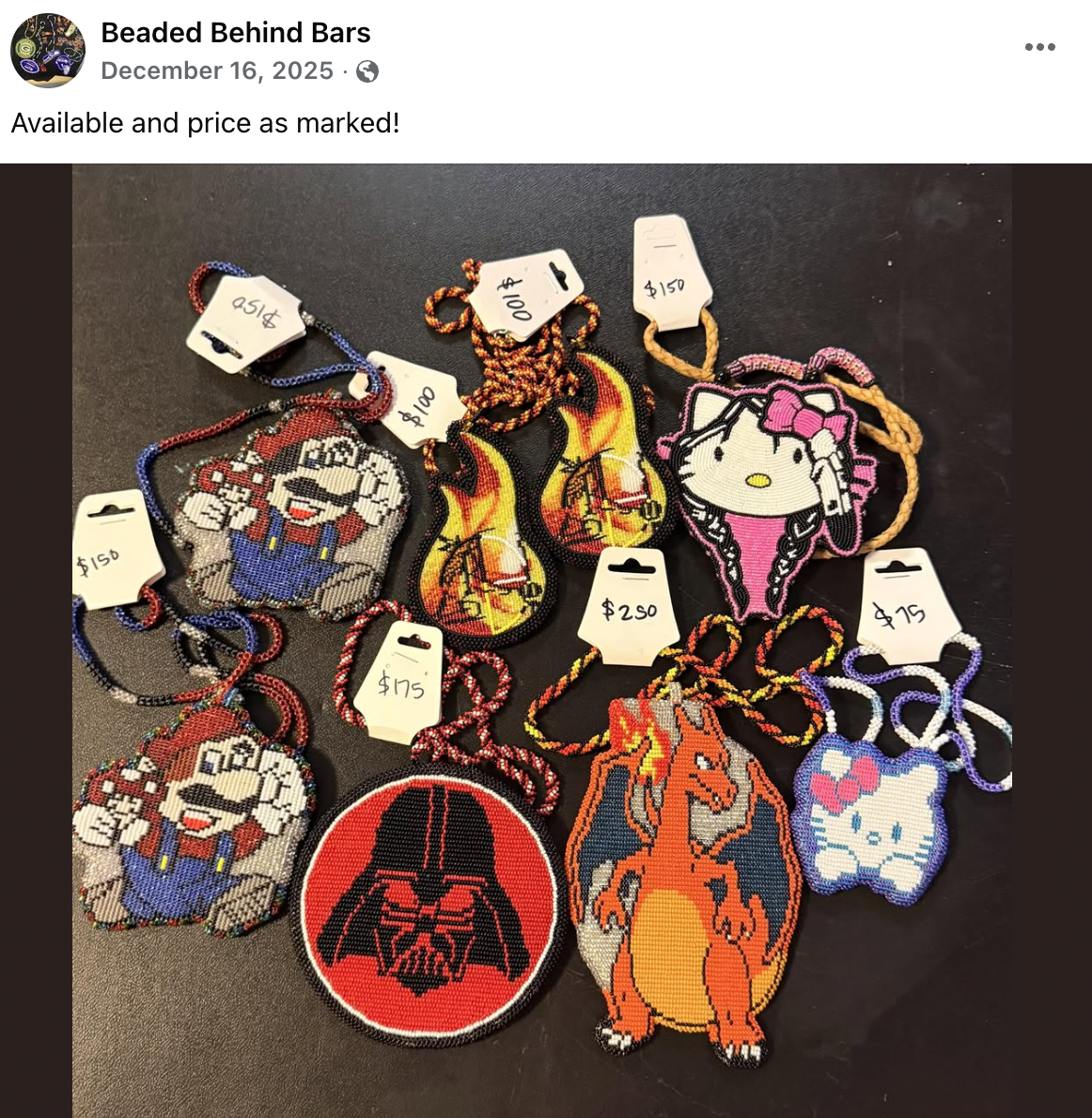
A non-Indigenous commercial enterprise has co-opted Indigenous beadwork traditional practices in Washington state prisons and infiltrated local powwow circles.
Beaded Behind Bars is owned and operated by an individual incarcerated at Stafford Creek Corrections Center in Aberdeen, and his wife. Both are non-Tribal and non-Indigenous. They contract with incarcerated people to bead works that appear to be Indigenous-made, but that are overwhelmingly made by non-Indigenous people.
According to this Daybreak Star Radio podcast interview, Beaded Behind Bars “negotiates” commercial prices for the prison beadwork. They buy the art under a 60%/40% profit sharing arrangement, or commission it under a 70%/30% arrangement, before reselling it on Facebook, at commercial popups (recently, at a Tacoma Krispy Kreme), or at Tribal powwows.
The Tribal powwow community generally believes Beaded Behind Bars is an Indigenous organization, because of the high quality of the beadwork. Tragically, most of the incarcerated men doing the beadwork were taught beading by caring Indigenous brothers who wished to share the therapeutic benefits of the practice with their non-Indigenous brothers.
While our incarcerated Indigenous relatives typically bead in prayer and produce works that depict the spiritual or natural world, the incarcerated non-Indigenous beaders often bead pop-cultural logos. They bead logos for Pokemon, Mario Brothers, Starbucks, Harley Davidson, and collegiate and professional sports teams—pretending it is all Indigenous-made art.
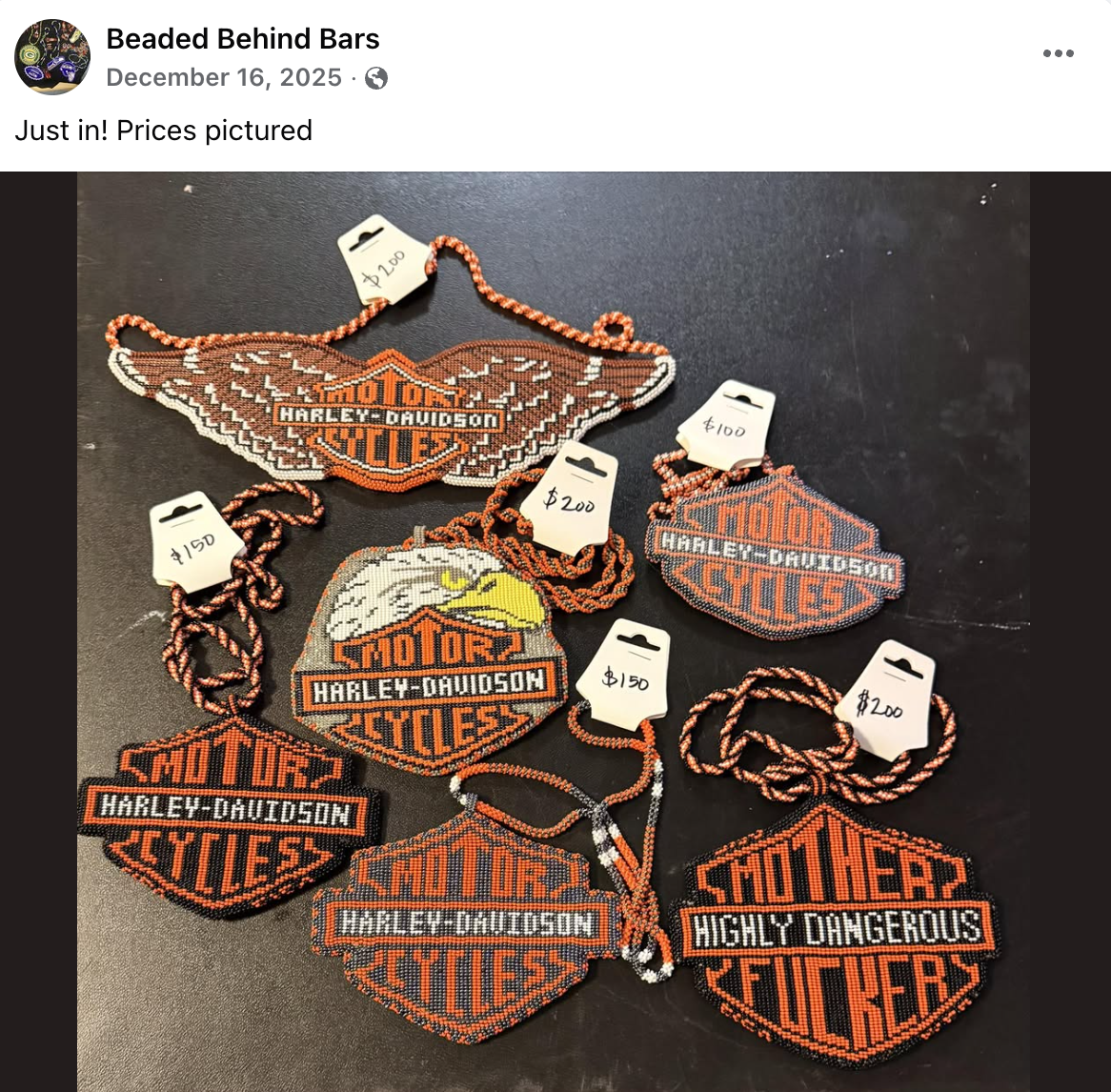
They bead those mainstream commercial logos because they are commercially desirable in the outside world. They know that Indigenous beadwork is trendy. They know they can get away with it appearing Indigenous-made, without actually being Indigenous-made. They have duped our people, including the Tribal powwow community.
For 16 years, we have fought to protect our incarcerated Indigenous relatives’ right to bead in prayer. Through customary practices, they find healing. Through those practices, they avoid further troublemaking. Through those practices, they learn generosity, especially when they gift their art to prison powwow guests. Understanding the spiritual power of beading, our incarcerated Indigenous relatives often gratefully repeat the refrain: “every bead is a prayer.”
We categorically oppose the cultural appropriation and mass commercialization of Indigenous beadwork by Beaded Behind Bars and their affiliates. These commercial arrangements violate state corrections policy, jeopardize our incarcerated Indigenous relatives’ rights, and cheapen the cultural and spiritual importance of genuine Indigenous beadwork practices.